
Orchid Care
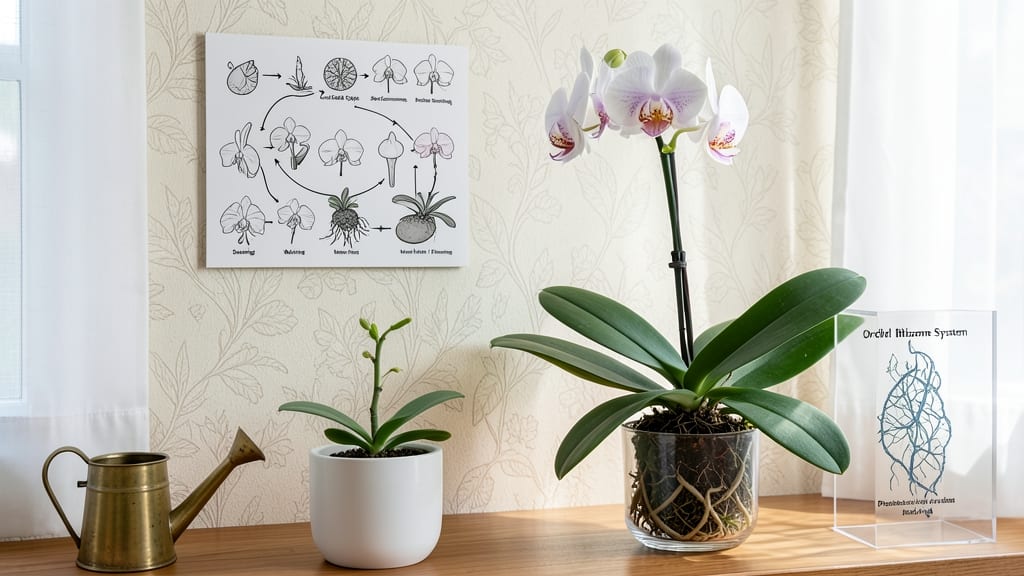
Orchids are perennials because they regrow annually from specialized storage structures like rhizomes or pseudobulbs, allowing them to survive multiple growing seasons with proper care.
This perennial nature means orchids can live for years—some even decades—if given the right conditions. 🌱 Unlike annuals that complete their life cycle in one season, orchids store energy in their underground structures during dormancy, then burst back to life when temperatures rise and light increases.
The key difference from other perennials is how orchids manage their energy: their pseudobulbs act like natural water and nutrient banks, while rhizomes spread horizontally to create new growth points.
What makes this especially fascinating is how orchids adapt their blooming cycles. Some species like phalaenopsis may flower multiple times a year with consistent care, while others like cymbidium have distinct seasonal blooming windows tied to their natural habitat's climate patterns.
This variability is why understanding your specific orchid's native growing conditions becomes crucial for maintaining its perennial health.
💡 In This Article
- Orchid Life Cycle: Why They Regrow Annually
- Caring for Orchids to Ensure Year-Round Regrowth
Orchid life cycle: why they regrow annually
The perennial nature of orchids stems from their unique biological adaptations, particularly their specialized storage organs. Unlike annuals that complete their life cycle in a single season, orchids rely on either rhizomes (horizontal underground stems) or pseudobulbs (thickened stems that store water and nutrients) to survive through dormant periods.
These structures act like natural batteries, storing energy during periods of reduced growth and releasing it when conditions become favorable again. 🌱
For example, cymbidium orchids develop thick pseudobulbs that can store enough moisture to last through dry seasons, while phalaenopsis orchids use their rhizomes to spread and create new growth points. This storage mechanism allows orchids to regrow year after year, often for decades, provided they receive adequate care.
The process begins when temperatures rise and light levels increase, triggering the release of stored nutrients and the initiation of new growth.
Seasonal dormancy plays a critical role in this cycle. Many orchid species enter a period of reduced activity during cooler months, conserving energy until spring or summer when growth resumes.
This dormancy is particularly pronounced in terrestrial orchids like cymbidium and paphiopedilum, which may even shed leaves to minimize water loss. In contrast, epiphytic orchids like dendrobium may continue growing year-round in warm climates but still rely on their pseudobulbs for energy storage.
The biological triggers for regrowth are fascinating. Orchids respond to a combination of temperature shifts, day length, and humidity levels. For instance, a 10°F (5.5°C) increase in nighttime temperatures can signal the start of new growth in many species.
This sensitivity to environmental cues is why orchids often bloom at specific times of year, aligning with their natural growing seasons. Unlike biennial plants that flower once and then die, orchids can produce multiple blooms over their lifespan, thanks to these adaptive storage structures.
Comparing orchids to other perennials like hostas or daylilies highlights their unique efficiency. While these plants store energy in roots or tubers, orchids' pseudobulbs and rhizomes are more specialized for water conservation and rapid regrowth.
This efficiency is why orchids can thrive in diverse environments, from tropical rainforests to temperate gardens, with proper care. The key to maintaining this perennial growth lies in mimicking their natural conditions as closely as possible.
What most gardeners don't realize is how light intensity affects this cycle. Orchids need bright, indirect light to photosynthesize effectively, but too much direct sunlight can damage their delicate leaves. This balance is crucial for maintaining the health of their storage organs.
For example, phalaenopsis orchids typically require 12-14 hours of light per day, while cattleya orchids can tolerate slightly more intense light conditions. Understanding these specific needs is essential for encouraging annual regrowth and blooming.