
Flowers
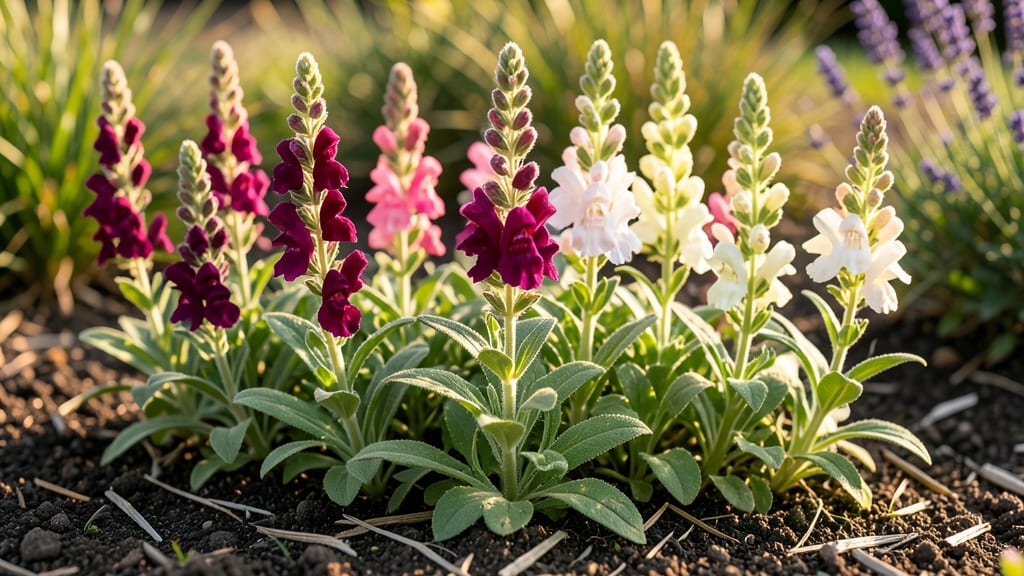
Snapdragons aren't true perennial flowers in most regions, but they can regrow from their base in warmer climates like zones 7–11 after winter. Their ability to return depends on how well they survive frost and the care you provide during dormancy.
Most gardeners treat snapdragons as annuals because they die back completely in cold winters—only their roots often survive underground. 🌱 The key difference in warmer zones is that the crown (the thickened base where leaves meet the stem) stays alive through mild winters, allowing new growth in spring.
This makes them semi-perennial in ideal conditions, though they won't thrive like true perennials without proper protection.
For example, in zone 8, I've seen snapdragons return for 3-4 years with heavy mulching, while in zone 5, they typically need replanting annually. The secret lies in protecting the root zone from freezing temperatures—this is why gardeners in cooler climates often overwinter them in containers or greenhouses.
💡 In This Article
- Snapdragon Hardiness Zones and Winter Survival Factors
- How to Extend Snapdragon Lifespan as a Semi-Perennial
Snapdragon hardiness zones and winter survival factors
The snapdragon's ability to return year after year hinges on its hardiness zone—specifically zones 7–11, where winter temperatures rarely drop below 10°F. In these regions, the plant's crown (the thickened base near the soil) enters dormancy but remains alive, protected by a natural insulating layer of dead foliage.
The root system, which can extend 12–18 inches deep, stores carbohydrates during the growing season to fuel regrowth in spring.
Frost triggers a biochemical process where the plant converts stored sugars into antifreeze-like compounds (glycoproteins) that prevent ice crystal formation in cells. This is why snapdragons in zone 8 often survive winters with 20–30°F dips, while those in zone 5 typically die back completely.
The critical threshold is 15°F: below this, cell membranes rupture, and the crown loses viability. 🌡️
Here's how the process works: In fall, snapdragons naturally shed their foliage, reducing transpiration and conserving energy. The remaining stem tissue hardens and turns woody, creating a protective barrier.
When spring arrives, the crown detects increasing daylight (12+ hours) and rising soil temperatures (50°F), triggering new shoot formation from dormant buds. This regrowth isn't as vigorous as true perennials because snapdragons allocate more energy to flower production than root expansion.
Zone differences create dramatic variations in survival rates. In zone 10, snapdragons may return for 5+ years with minimal care, while in zone 7, they typically last 2–3 years without protection.
The transition zone (6) is particularly challenging because occasional hard freezes (-5°F) can kill the crown while milder winters might allow partial survival. This explains why gardeners in these areas often treat them as annuals despite their semi-perennial tendencies.
What most gardeners overlook is the role of soil temperature in winter survival. Even in cold zones, the 5-inch-deep soil temperature rarely drops below 32°F, creating a microclimate where roots can remain active.
This is why mulching with 4–6 inches of straw or leaves can raise soil temps by 5–10°F, making the difference between survival and dieback in marginal zones.
Consider this comparison: A snapdragon in zone 9 with proper winter care might produce 30–40% more flowers in its second year than a newly planted annual, while one in zone 6 without protection will likely need replanting annually.
The plant's semi-perennial nature becomes an asset when you understand these zone-specific survival mechanisms. 🌿