
Vegetables
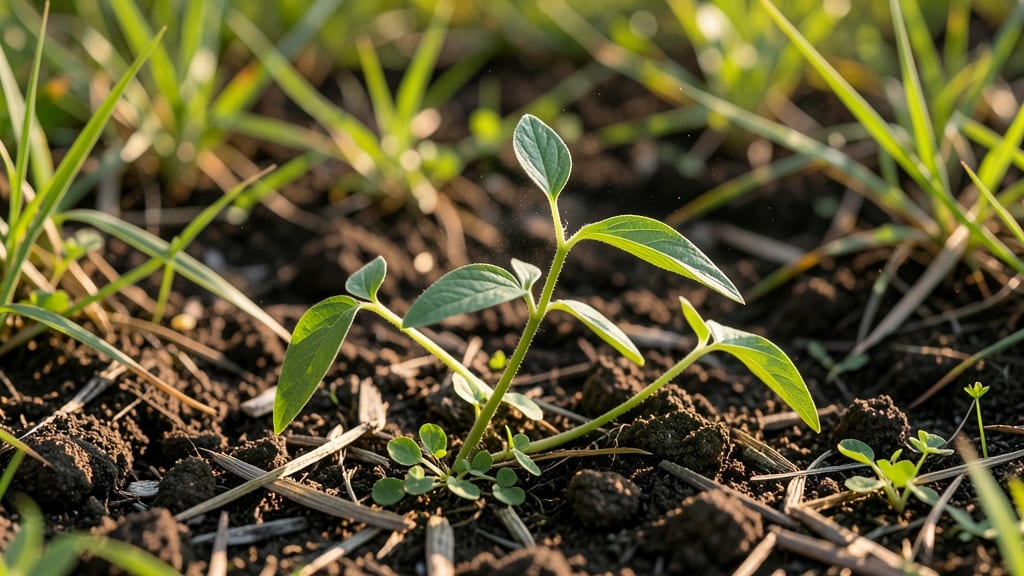
Identifying black bindweed seedlings means spotting their distinctive heart-shaped leaves with pointed tips and glossy dark green color, which grow in tight clusters along creeping stems. These young plants show rapid growth and quickly start twining around nearby plants or structures.
Black bindweed seedlings start small but grow aggressively, making early identification crucial. 🌱 The key is their arrowhead-shaped leaves that appear in whorls around the stem, unlike morning glory's alternating pattern. Their stems are smooth and hairless, while their roots develop deep and fibrous—perfect for choking out other plants.
I've found that seedlings under 2 inches can still be pulled by hand, but wait too long, and you're dealing with a stubborn invasive vine.
Once you spot them, act fast—they can spread 10 feet per season if left unchecked. The best approach is to dig out the entire root system, including any underground runners, to prevent regrowth.
For stubborn patches, a targeted herbicide like glyphosate works well when applied directly to the leaves. Always wear gloves, as black bindweed sap can irritate skin.
💡 In This Article
- Distinguishing Black Bindweed Seedlings from Similar Plants
- Immediate Steps to Remove Black Bindweed Seedlings Before They Spread
Distinguishing black bindweed seedlings from similar plants
The most reliable way to identify black bindweed seedlings is by examining their leaf arrangement and stem characteristics. Unlike morning glory, which has alternating leaves along the stem, black bindweed seedlings display leaves in a whorl pattern—typically 3-6 leaves radiating from a single point around the stem.
This distinctive arrangement is your first clue. The leaves themselves are heart-shaped with pointed tips, measuring about 1/4 to 1/2 inch wide at this early stage, and they have a glossy, almost waxy texture that reflects light differently than duller leaves.
Another key difference is the stem texture. Black bindweed stems are smooth and hairless, while morning glory stems often have fine hairs or bristles.
The young seedlings also produce a milky sap when broken, which can irritate skin—a common trait among bindweed species. 🌿 The roots are another giveaway: black bindweed develops deep, fibrous roots that spread horizontally, forming dense underground networks. In contrast, morning glory roots are more shallow and less invasive.
Ground ivy, another common look-alike, has rounded leaves with scalloped edges and a more square stem when viewed in cross-section.
Timing matters too. Black bindweed seedlings emerge in early spring, often before other vines, and grow rapidly in warm conditions. They can climb or trail aggressively, twining around other plants or structures within 2-3 weeks of germination. This rapid growth habit helps them outcompete native plants quickly.
The young vines also produce small, white trumpet-shaped flowers later in the season, but by then, it's often too late for easy removal. The key is catching them when they're still small—under 3 inches tall—when manual removal is most effective.
For gardeners, the best time to inspect for seedlings is in late afternoon when light conditions highlight the glossy leaf surfaces. Use a magnifying glass if needed to check leaf patterns and stem textures.
I've found that comparing seedlings side-by-side with known samples of morning glory or ground ivy makes the differences immediately obvious. 🔍 The whorled leaf pattern alone is often enough to confirm black bindweed, but checking the stem texture and root structure provides additional confirmation.
Here's a quick comparison to help you spot the differences:
- Black Bindweed: Whorled leaves (3-6 per node), smooth stems, deep fibrous roots, glossy leaves
- Morning Glory: Alternating leaves, hairy stems, shallow roots, matte leaves
- Ground Ivy: Rounded scalloped leaves, square stems, creeping habit, minty aroma when crushed
Understanding these visual cues helps you act quickly before the seedlings establish themselves. The earlier you identify and remove them, the easier it is to prevent a full-blown infestation. 💪