
How To
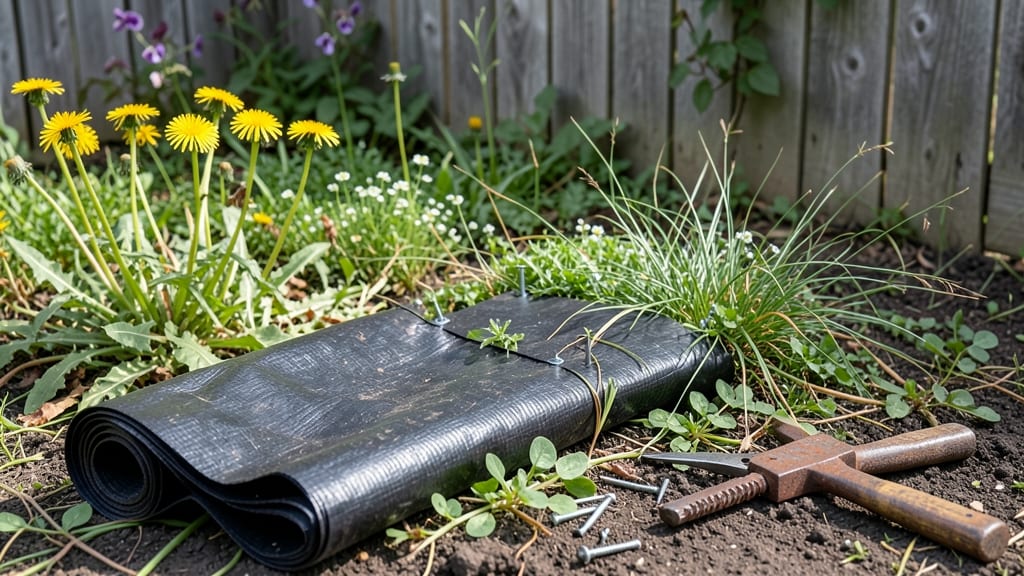
You can put weed barrier over existing weeds, but it won't eliminate them—it only blocks sunlight temporarily, allowing weeds to regrow through gaps. For lasting results, first smother weeds with thick mulch or cardboard for weeks to weaken them, then cut them down before installing the barrier.
Weed barriers work by blocking sunlight, which weeds need to grow.
However, existing weeds often push through cracks or along edges, especially if their roots are still active. 🌱 The key is preparation: smothering weeds first starves their roots, while cutting them down reduces competition for nutrients before you lay the barrier. This two-step process significantly improves long-term control.
Thicker barriers like landscape fabric perform better than lightweight plastic because they create a more consistent light-blocking layer. But even the best barrier will fail if weeds aren't properly weakened beforehand.
I've seen cases where homeowners skipped prep work and ended up with weeds sprouting within weeks—always take the time to clear the area thoroughly first.
💡 In This Article
- How Weed Barriers Work Against Existing Weeds
- Step-by-Step Prep for Installing Weed Barrier Over Weeds
How weed barriers work against existing weeds
Weed barriers primarily work by blocking sunlight, which is critical because 90% of weed seeds require light to germinate and grow. When you lay a barrier over existing weeds, you're essentially creating a dark, oxygen-deprived environment beneath it.
Landscape fabric, for example, allows some moisture to pass through while blocking 95-99% of light, which suffocates weed roots over time. However, this process takes 4-8 weeks to fully weaken established weeds, depending on the species and soil temperature.
The effectiveness of the barrier depends heavily on its thickness and material. Heavy-duty landscape fabric (3-5 oz per square yard) blocks more light and resists tearing compared to lightweight plastic or woven fabric, which can degrade under UV exposure within 1-2 years.
Plastic barriers, on the other hand, block nearly all light but trap heat, which can actually accelerate weed seed germination in some cases. The ideal choice is a breathable, UV-stabilized fabric that balances light deprivation with moisture regulation.
Weeds often persist because many species have deep root systems or spread via rhizomes (underground stems). For instance, crabgrass and nutsedge can regrow from fragments as small as 1 inch if their roots aren't fully severed.
Even with a barrier in place, soil temperature fluctuations can stimulate dormant weed seeds in the "seed bank" to sprout. In warmer climates, where soil temperatures stay above 70°F, weeds may push through gaps within 2-3 weeks, while cooler regions see slower but more persistent regrowth.
Another critical factor is the barrier's edges. Weeds often find their way through even the smallest gaps—just 1/8-inch can allow sunlight to reach soil, triggering new growth. This is why securing edges with landscape staples or burying them 6-12 inches deep is essential.
Without proper sealing, weeds can migrate along the perimeter, creating a "halo effect" where the barrier's effectiveness diminishes over time.
Consider this real-world example: A study by the University of Georgia found that 80% of weed regrowth occurred within 6 inches of barrier edges when proper sealing wasn't performed. The solution?
Overlap barrier sections by 6-12 inches and use a 2-inch mulch layer on top to further block light and suppress any emerging shoots. This layered approach creates a more reliable barrier system.
Finally, don't overlook the role of existing weed biomass. Thick weed growth can create air pockets beneath the barrier, allowing some plants to survive.
Cutting weeds down to 2-3 inches tall before installation reduces this risk by 40-50%, as it minimizes the volume of plant material that could decompose and create gaps. 🌱