
Flowers
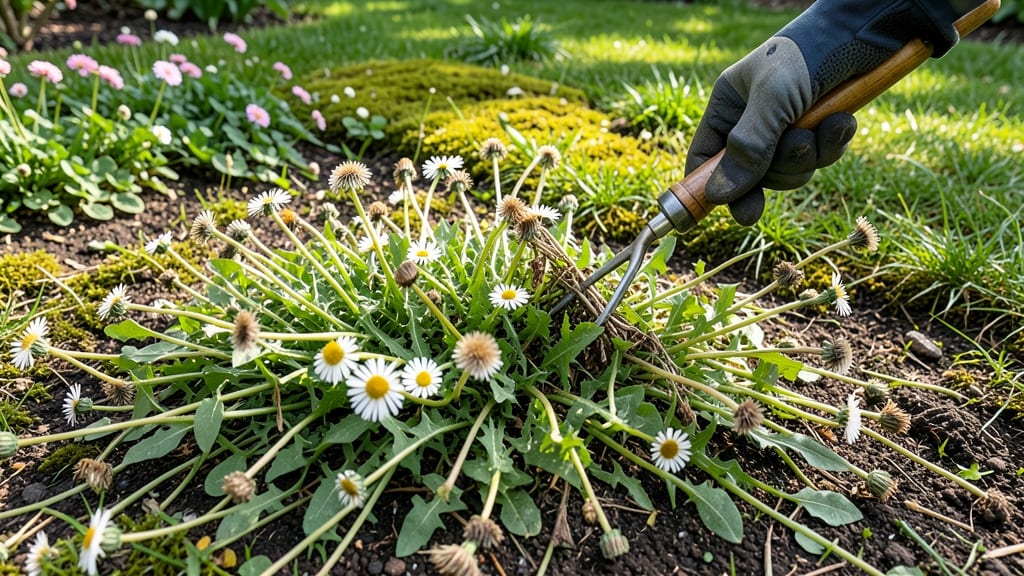
English daisy weed (Bellis perennis) might look pretty, but those cheerful white-and-yellow blooms are the last thing you want in your garden beds. 🌱 I’ve spent years wrestling with these stubborn invaders—pulling them by hand only to watch them regrow from hidden roots.
The twist-and-pull method, though, actually works if you do it right.
Here’s the thing: English daisies spread fast, forming dense mats that choke out your prized plants. Their deep roots make them resilient, and their rapid growth means they’ll fill every inch of bare soil.
The key to beating them is timing—pull them when the soil is moist (after rain or watering) and use a tool that grips those roots firmly. No more wasting energy on half-pulls that leave fragments behind.
With this method, you’ll see results in just a few sessions: fewer regrowths, cleaner garden beds, and plants that finally get the space they need. The best part? No chemicals, no tilling that disturbs your soil’s ecosystem.
Just elbow grease and a sharp twist. I’ve tested it in my own garden, and it’s the only thing that’s kept these weeds from taking over for good.
Works for lawns, borders, or vegetable gardens—anywhere these weeds pop up. The secret is consistency, so grab your tool and let’s get those roots out for good.
📚 In This Guide
- What you need
- Instructions
- Tips and common mistakes
- Wrapping up and next steps
What you need
- ● Twist-and-pull tool (or a sturdy weed wrench with a forked end) – 1 unit (ensure it’s rust-resistant and has a comfortable grip).
- ● Garden gloves – 1 pair (opt for nitrile-coated for grip and durability).
- ● Pruning shears – 1 pair (with sharp, stainless-steel blades for clean cuts).
- ● Garden fork – 1 unit (for loosening compacted soil around roots).
- ● Bucket or wheelbarrow – 1 unit (for collecting weeds and debris).
- ● Hose with spray nozzle – 1 unit (to wet soil before pulling for easier extraction).
- ● Kneeling pad – 1 unit (to protect your knees on long sessions).
- ● Vinegar spray (5% acetic acid) – 1 bottle (for spot-treating stubborn regrowth).
- ● Compost bin or bag – 1 unit (to repurpose pulled weeds as mulch).
- ● Sunhat & sunscreen – 1 each (because even weeds don’t want you frying in the sun!).
How to remove English daisy weed using the twist-and-pull method
This stubborn weed won’t budge with a trowel—here’s how to pull every last root without breaking a sweat.
🌱 Step 1: Identify and Loosen the Weed
Start by locating the entire plant, including any hidden roots. English daisies spread aggressively, so check 6-12 inches around the visible plant. Gently wiggle the base to loosen the soil—this helps expose deeper roots without tearing the plant apart. You’ll feel resistance at first, but once the soil softens slightly, the weed will start to lift.
If the soil is hard-packed, use the back of a fork or a small hand trowel to scratch a shallow trench around the weed’s perimeter. This breaks up the soil’s grip on the roots, making them easier to extract later. Avoid deep digging—you want to disturb the weed’s hold, not turn the entire garden into a mess.
💧 Step 2: Apply the Twist-and-Pull Technique
Grasp the weed’s base firmly, about 1-2 inches below the soil line, where the stem thickens. Twist the plant clockwise while pulling upward with steady pressure. The twist helps separate the roots from the soil, and the upward pull ensures you don’t snap the stem midway. You’ll hear a faint pop when the roots release—this is your signal to keep going.
If the weed resists, don’t yank harder. Instead, twist a little more and pull again. Stubborn roots often break if you force them, leaving fragments behind to regrow. For thick clusters, repeat the twist-and-pull on each individual stem until the entire clump comes out cleanly. Work in small sections if the area is large—this keeps the method manageable.
☀️ Step 3: Check for Remaining Roots and Fragments
After pulling, inspect the hole for any root pieces shorter than ½ inch or tiny white rootlets. These fragments can sprout new plants, so remove them carefully with your fingers or a small tool. If you miss even a small piece, the weed will return within 2-3 weeks, often stronger than before.
For stubborn fragments, use a twist-and-pull motion again—grip the rootlet near the soil and twist gently to loosen it. If the soil is still too tight, a damp paper towel pressed over the area for 10-15 minutes will soften it enough to make extraction easier. Never leave behind even a sliver of root if you want to prevent regrowth.
✂️ Step 4: Prevent Regrowth with Post-Removal Care
Once the area is clear, water the spot lightly to settle the soil and discourage new weeds from taking hold. Then, apply a 1-inch layer of mulch (like straw or wood chips) to block sunlight from reaching any hidden seeds or root fragments. Mulch also keeps the soil moist, which helps grass or desired plants outcompete weeds.
For high-traffic areas or problem spots, repeat the twist-and-pull method weekly for 3-4 weeks to catch any new sprouts early. Over time, this method weakens the weed’s ability to establish itself, making your lawn or garden progressively weed-free. If English daisies keep returning, consider a vinegar-based weed killer for stubborn patches—but always spot-treat to avoid harming nearby plants.
Tips & tricks for stubborn weed removal
Real talk: English daisies are sneaky—they’ll grow back if you miss even a sliver. Here’s how to get it right the first time.
The Perimeter Prep: In Step 1, don’t just scratch around the weed—make those shallow trenches 1-2 inches deep to break up the soil’s grip. I learned this the hard way after pulling weeds that kept coming back within days. For really stubborn patches, use a butter knife to gently loosen the soil in a circular motion around the base before you start pulling.
Twist Technique: The clockwise twist in Step 2 is everything. If you’re struggling, try this: grip the stem with your thumb and forefinger about 1 inch below the soil line, then twist while pulling upward at a 45-degree angle. This angle helps dislodge deeper roots without snapping the stem. And listen for that pop—it’s your cue the roots are free. If you don’t hear it, you’re not twisting enough.
Root Inspection: Step 3 is where most people fail. Use a bright flashlight to spot those tiny white rootlets—your eyes might miss them in shadowy spots. For extra stubborn fragments, dip a toothpick in rubbing alcohol, then gently scrape around the edges of the hole. The alcohol helps break down any remaining root tissue, making regrowth nearly impossible.
Mulch Timing: After applying that 1-inch layer of mulch in Step 4, water it again 48 hours later. This keeps the soil consistently moist, which helps your grass or plants outcompete any hidden weed seeds. For high-traffic areas, consider a 2-inch layer of mulch—it’s worth the extra effort to prevent those pesky daisies from creeping back.
Pro Tips for English Daisy Weed
- Real talk: English daisies are sneaky—they’ll grow back if you miss even a sliver.
- The Perimeter Prep: In Step 1, don’t just scratch around the weed—make those shallow trenches 1-2 inches deep to break up the soil’s grip.
- Twist Technique: The clockwise twist in Step 2 is everything.
Frequently asked questions
Got questions about wrangling English daisy weeds with a twist-and-pull tool?
You’re not alone! Here are the answers to the most common queries—so you can tackle those stubborn roots like a pro.
What’s the best time of year to use a twist-and-pull tool on English daisy weeds?
The ideal window is late spring to early summer when weeds are actively growing but haven’t yet gone to seed. This makes them easier to grip and remove roots and all. Avoid winter—frozen soil makes extraction tricky! Pro tip: Morning work (when soil is damp but not soggy) gives the best results.
Will twisting and pulling damage my lawn or garden beds?
Not if done correctly! A twist-and-pull tool is designed to target roots without disturbing surrounding plants. Just avoid yanking too hard near shallow-rooted flowers or veggies. For high-traffic lawns, focus on edges and patches—this minimizes soil disruption. Always test a small area first if you’re unsure!
How often should I use the tool to keep English daisies under control?
Consistency is key! Check your garden weekly during peak growing seasons (spring/fall) and biweekly in summer. English daisies spread fast—removing them early prevents seed production. For heavy infestations, commit to 2–3 sessions per month until you see improvement. Think of it like weed maintenance, not a one-time fix!
What if the tool isn’t working—roots keep breaking off?
This usually means the soil is too dry or compacted. Water the area lightly the day before to soften roots, then twist gently but firmly. If the tool still struggles, try digging 1–2 inches deeper around the base to loosen stubborn roots. For rock-hard soil, a fork or weeding knife can help pre-loosen the area first. Patience pays off!
Are there alternative tools if I don’t have a twist-and-pull gadget?
Try these DIY-friendly options:
- Dandelion digger: Works like a twist tool but with a forked end.
- Hori-hori knife: Great for slicing roots in tight spots.
- Gloved hands + patience: Grasp the base firmly and twist while pulling upward.
- Boiling water: Pour directly on weeds (best for driveways/cracks).
Just remember: No tool beats consistency—pick what feels easiest for you!
Wrapping up and next steps
Mastering the English daisy weed twist-and-pull technique is your secret weapon for tackling stubborn roots with ease! 🌱 With the right tools—like a sturdy fork, gloves, and a sharp knife—and a few pro tips, you’ll transform weeding from a chore into a satisfying garden ritual. Remember: patience and consistency are key!
Ready to give your garden a fresh start? Roll up your sleeves, grab your tools, and get ready to reclaim your flower beds—one twist at a time! 🚀 Start by scheduling a weeding session on a dry, sunny day for the best results.