
Neem Oil
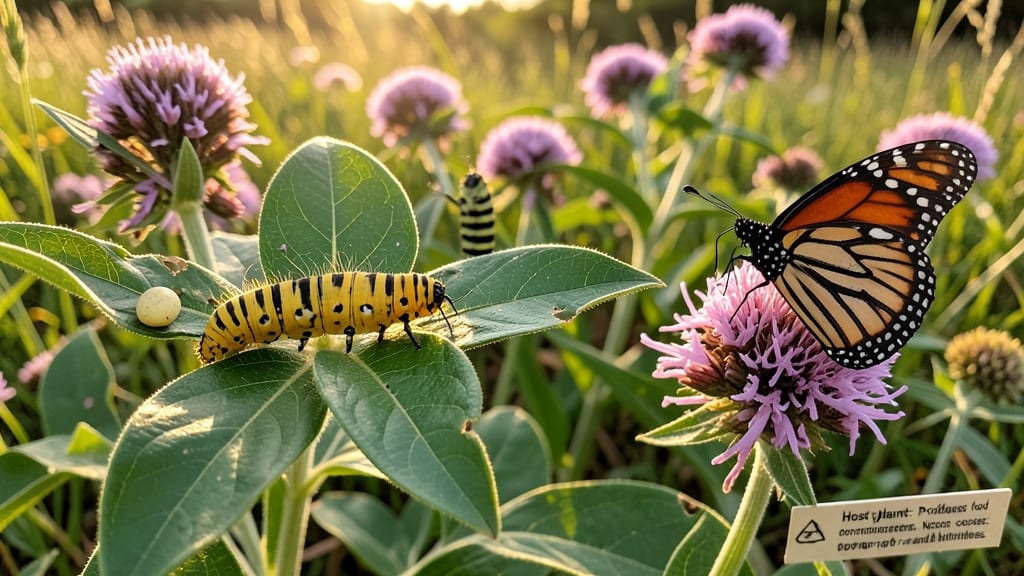
Milkweed helps monarch butterflies by serving as their sole host plant for egg-laying and larval feeding, providing essential nutrients like cardiac glycosides that monarch caterpillars require to develop and deter predators. Without it, monarchs cannot complete their life cycle.
Milkweed isn't just food for monarch caterpillars—it's their survival lifeline. 🌱 The plant's toxic cardiac glycosides, which would harm most animals, actually help monarch caterpillars develop their own chemical defenses against predators.
These compounds accumulate in the caterpillars' bodies, making them unpalatable to birds and other threats during their vulnerable larval stage. What's fascinating is how this relationship extends beyond nutrition: female monarchs instinctively seek out milkweed to lay their eggs, ensuring their offspring have access to this critical resource from birth.
This specialized connection explains why monarch populations decline so dramatically when milkweed disappears from their habitat. Without these plants, caterpillars can't grow, pupate, or develop the protective compounds they need to survive into adulthood.
The good news? Planting native milkweed species in gardens creates essential feeding grounds that support the entire monarch life cycle.
💡 In This Article
- Milkweed’s Chemical Defense and Monarch Caterpillar Survival
- Planting Milkweed for Monarch Conservation: Best Practices
Milkweed’s chemical defense and monarch caterpillar survival
The biochemical relationship between milkweed and monarch caterpillars begins with cardiac glycosides—natural toxins that would poison most animals. These compounds, primarily cardenolides, are produced by milkweed as a defense mechanism against herbivores.
However, monarch caterpillars have evolved to not only tolerate but metabolize these toxins, converting them into their own chemical armor. When caterpillars consume milkweed leaves, their bodies absorb and store these compounds in specialized cells, making them unpalatable to predators like birds and spiders.
This chemical defense works through a fascinating biochemical process. The cardiac glycosides interfere with the sodium-potassium pumps in predator cells, disrupting their nervous systems and causing muscle contractions. For monarch caterpillars, these toxins serve a dual purpose: they deter predators while simultaneously supporting their growth.
Studies show that caterpillars fed milkweed with higher cardenolide concentrations grow 20-30% faster than those on toxin-free diets, likely due to enhanced nutrient absorption facilitated by these compounds.
The bright orange and black warning colors of adult monarchs also signal their toxicity, a visual cue learned by predators after their first bad experience with a caterpillar.
The accumulation of cardiac glycosides continues even after metamorphosis. Adult monarchs retain these toxins in their wings and bodies, ensuring their offspring inherit this protective advantage. This biochemical cycle creates a co-evolutionary arms race between milkweed and monarchs, where each adaptation by one species drives a response in the other.
Without milkweed’s toxins, monarchs would lack this crucial defense mechanism, making them far more vulnerable to predation during their most critical developmental stages.
Here’s how this chemical relationship plays out in the wild: A female monarch will lay her eggs exclusively on milkweed leaves, ensuring her larvae have immediate access to both food and protection.
The caterpillars then consume 50-100 times their body weight in milkweed leaves during their 2-3 week larval stage, rapidly accumulating the necessary cardiac glycosides. This rapid feeding isn’t just about growth—it’s a survival strategy that transforms the caterpillar into a living fortress against predators.
The effects of this chemical defense extend beyond individual survival. When monarch populations thrive, they create a trophic cascade that benefits entire ecosystems. Healthy monarch populations indicate healthy milkweed habitats, which in turn support a diverse range of pollinators and insects.
The decline of milkweed due to habitat loss directly correlates with monarch population crashes, demonstrating how this plant-butterfly relationship is foundational to ecological balance.
What makes this relationship even more remarkable is its specificity. Of the 400+ milkweed species worldwide, only about 30 are suitable for monarchs, and only 10-15 species are considered optimal hosts.
This specificity ensures that monarchs only develop the proper chemical defenses when feeding on the right milkweed species, creating a precise ecological match that’s difficult to replicate artificially. 🌿