
Aphids
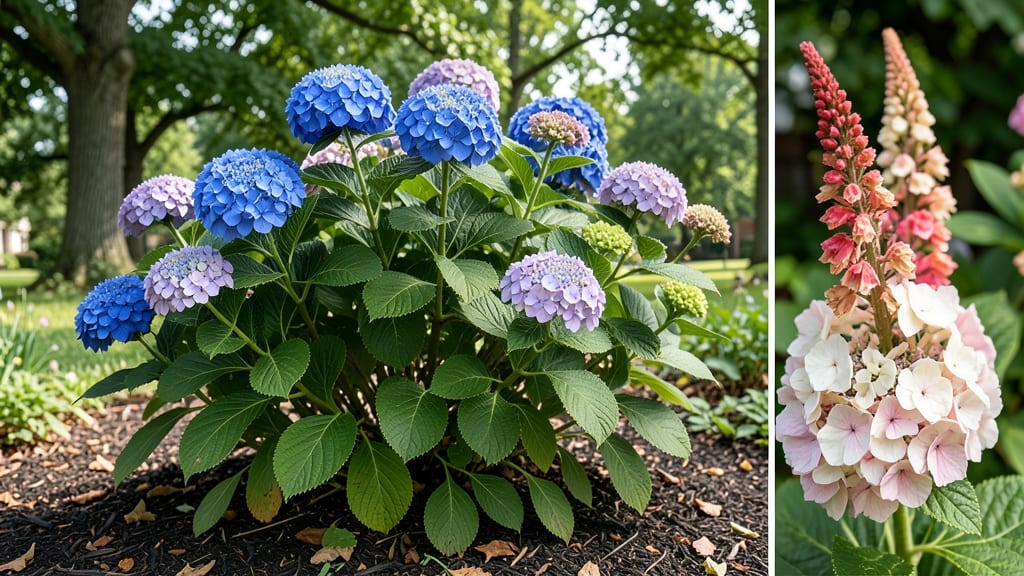
Yes, hydrangeas are perennials in most climates, meaning they return yearly—but they go dormant in winter, losing leaves and stems while storing energy underground in hardy root systems. This dieback is normal, not death, and spring regrowth proves their resilience.
Hydrangeas pull off a clever survival trick: they sacrifice above-ground growth to protect their roots. 🌱 When temperatures drop below 30°F, the plant's energy shifts underground, where roots and buds remain alive in a state of dormancy.
This is why your hydrangea might look completely dead by winter—its leaves and stems have essentially shut down to conserve energy. The good news? Cold-hardy varieties like Bigleaf and Panicle hydrangeas can handle zones 3-9, while Oakleaf types extend even further south.
Their secret weapon is a thick layer of mulch, which acts like a blanket to shield roots from extreme cold.
What sets hydrangeas apart from other perennials is their dramatic transformation. While some plants simply go dormant with minimal visible changes, hydrangeas perform a full "reset"—dropping leaves and stems to focus all resources on underground growth.
This strategy allows them to bounce back vigorously in spring, often producing even more abundant blooms than the previous year.
💡 In This Article
- Why Hydrangeas Look Dead in Winter (And How They Survive)
- Protecting Perennial Hydrangeas Through Winter: Mulching and Pruning Tips
Why hydrangeas look dead in winter (and how they survive)
Hydrangeas employ a sophisticated survival mechanism called dormancy, triggered by dropping temperatures below 40°F. As cold weather approaches, the plant's growth hormones (like gibberellins) decrease while stress hormones (abscisic acid) increase, signaling the plant to enter a state of suspended animation.
This process causes leaves to turn brown and drop, stems to wither, and the plant to appear completely dead—a phenomenon called winter dieback.
The key lies underground: specialized buds called crown buds form at the base of the plant, packed with meristematic cells that remain protected by insulating layers of tissue.
The root system plays a starring role in this survival strategy. Hydrangea roots store carbohydrates (up to 20% of their dry weight) during the growing season, which they convert into sugars and starches for winter energy reserves.
These roots can extend 3-5 feet deep in well-drained soil, allowing them to access moisture even when surface soil freezes. The most cold-hardy varieties, like Hydrangea paniculata (panicle hydrangea), can withstand temperatures as low as -25°F when properly mulched, while Hydrangea macrophylla (bigleaf) typically handles down to 10°F.
What makes this adaptation fascinating is the plant's ability to regulate its own water content. During dormancy, hydrangeas reduce their water uptake by 70-80% compared to growing season levels, preventing ice crystals from forming in their cells.
This cellular dehydration is a temporary state—the moment spring temperatures rise above 50°F, the buds absorb moisture and hormones reactivate growth. You'll often see new shoots emerge within 2-4 weeks of consistent warm weather, proving the plant was never truly dead.
Climate zone adaptations vary dramatically between hydrangea species. Northern varieties like Limelight panicle hydrangea have thicker bark and more insulating root tissue, while southern varieties like Oakleaf hydrangea (Hydrangea quercifolia) develop natural antifreeze proteins in their cells.
The difference in hardiness explains why Oakleaf types thrive in zones 4-9 while Bigleaf varieties struggle below zone 6 without protection. This biological flexibility is what allows hydrangeas to flourish across such diverse climates.
Consider this comparison: While annual plants complete their entire life cycle in one season, hydrangeas invest years building robust root systems. A mature hydrangea with 5+ years of growth can produce 2-3 times more flower buds than a young plant, thanks to accumulated energy reserves.
This long-term strategy explains why even severely pruned hydrangeas often rebound spectacularly—they're drawing from decades of stored resources.
The most striking evidence of this survival strategy occurs in early spring. As temperatures fluctuate between 32°F and 50°F, you'll notice tiny green shoots pushing through the mulch—these are the crown buds awakening.
Within weeks, these shoots will develop into new stems, leaves, and flower buds, often producing more abundant blooms than the previous year. This remarkable resilience is why hydrangeas remain one of the most popular perennials for gardeners in cold climates.