
Flowers
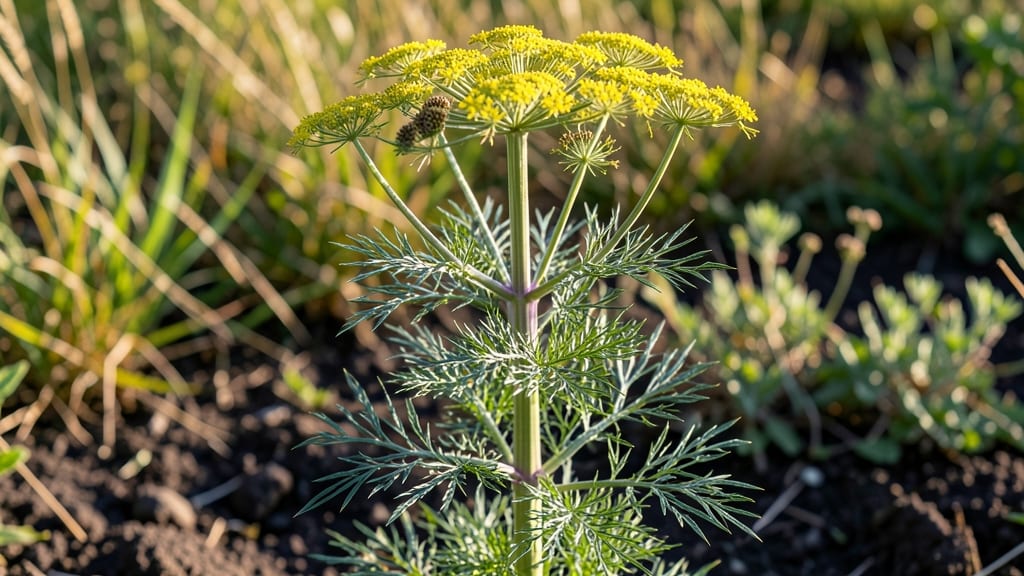
Dill isn't a true perennial—it's a biennial that mimics perennial behavior in warm climates by regrowing from its root system after winter dieback, provided temperatures stay above freezing. In colder areas, it completes its full two-year lifecycle.
This unique growth pattern makes dill a gardener's secret weapon for continuous harvests. 🌱 The plant's first year focuses on leaf production, while its second year shifts to flowering and seed development.
In mild winters, the roots survive dormancy, allowing regrowth—just like a perennial—while colder regions force the full two-year cycle. I've found that protecting dill roots with mulch during winter can dramatically extend its productive lifespan in transitional climates.
What's fascinating is how dill adapts to its environment. In USDA zones 8-10, you can often get three harvests in a single season from the same plant, while northern gardeners typically need to replant annually.
The key difference lies in temperature tolerance—roots need to stay above 20°F to survive winter dormancy.
💡 In This Article
- Dill’s Biennial Lifecycle Explained: Why It Dies Back
- How to Extend Dill’s Lifespan in Your Garden
Dill’s biennial lifecycle explained: why it dies back
Dill follows a two-year growth cycle where its first year focuses entirely on building a robust root system and producing lush foliage. During this vegetative stage, the plant prioritizes energy storage in its taproot, which can grow up to 12-18 inches deep.
This root system becomes the plant's survival mechanism—when temperatures drop below 20°F, the above-ground growth dies back completely, but the roots remain dormant until conditions improve. 🌱 The key here is that dill stores carbohydrates in its roots during summer and fall, which fuels regrowth when spring arrives.
The transition to its second year triggers a dramatic shift in energy allocation. As temperatures rise in spring, the plant redirects its resources toward flowering and seed production rather than leaf growth.
You'll notice the distinctive feathery yellow flowers that develop into seed heads—these contain the dill seeds we use for cooking. What's fascinating is that this flowering stage is temperature-sensitive: dill typically flowers when daytime temperatures exceed 60°F consistently for 2-3 weeks.
In colder climates, this second-year cycle completes fully, and the plant dies after seeding.
In warmer regions, though, the lifecycle gets interrupted by winter's arrival. When temperatures stay above 20°F during dormancy, the roots survive and can regrow foliage the following spring.
This is why dill often behaves like a perennial—it's not that it's truly perennial, but its root system acts as a biological memory, storing the information needed to restart growth when conditions are favorable.
The plant's ability to regenerate from these roots is what gives gardeners in mild climates the illusion of perennial behavior.
What most gardeners don't realize is that this biennial pattern is actually an evolutionary adaptation. Dill's two-year cycle allows it to maximize both leaf production (valuable for herbivores) and seed production (for reproduction) in separate growing seasons.
The dieback during winter serves as a natural pruning mechanism, forcing the plant to focus its energy on either growth or reproduction rather than maintaining both simultaneously. This strategy is particularly effective in temperate climates where winters provide a natural break in the growing season.
You can observe this lifecycle in action by planting dill in late summer. The plants will grow vigorously through fall, die back in winter, and often regrow in spring—giving you two harvests from what appears to be a single planting.
The secret lies in those hidden roots storing energy like a biological battery. Even a small root fragment left in the soil can regenerate a new plant, which is why dill often "volunteers" in garden beds year after year in suitable climates.
For those curious about the botanical details, dill belongs to the Apiaceae family (alongside carrots and parsley), and its biennial nature is shared by many other edible plants in this family.
The root system's ability to survive dormancy is what makes dill such a resilient garden plant—when you understand this lifecycle, you can work with it rather than against it to maximize your harvests.
The key takeaway is that dill's "perennial-like" behavior is actually a clever survival strategy that adapts to climate conditions. ✨