
Pests and Diseases
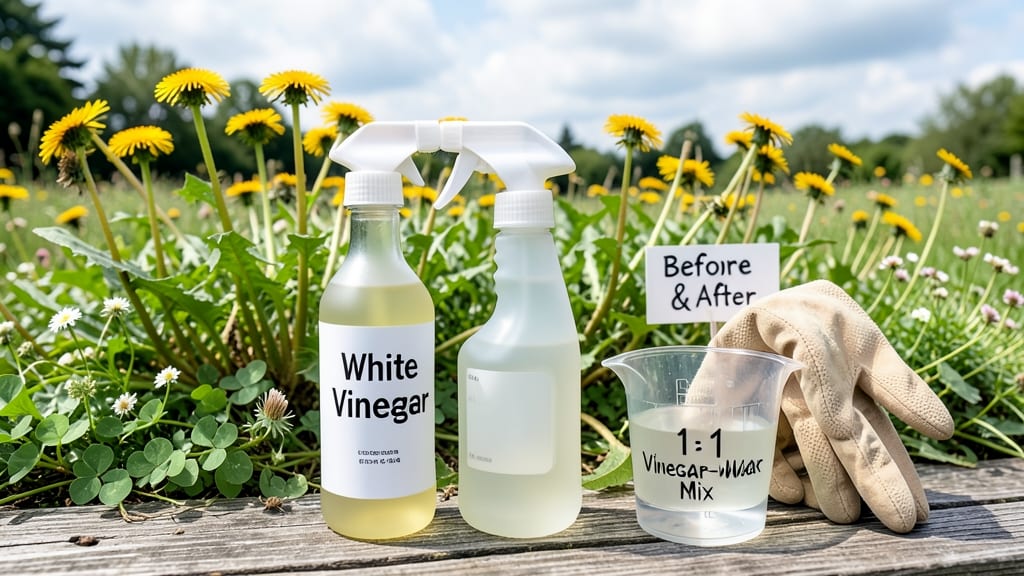
White vinegar weed killer works by disrupting weed cell membranes, causing visible wilting in 24–72 hours, though you'll need 1–2 weeks of follow-up sprays to prevent regrowth. For best results, apply undiluted on sunny days.
White vinegar's acetic acid content (typically 5–10%) acts like a natural herbicide by breaking down weed cell walls, which causes dehydration and kills the plant. 🌱 The key is consistency—while you'll see immediate wilting, the roots may need multiple treatments to fully die off.
I've found that spraying on a dry, sunny afternoon maximizes effectiveness, as the sun helps the vinegar penetrate deeper into the plant tissues. Just remember to avoid spraying desirable plants, as vinegar can harm them too.
For stubborn weeds like dandelions, you might need to reapply every 3–5 days until the plant completely dies. Always wear gloves and eye protection, since vinegar can irritate skin and eyes.
The best time to tackle weeds with vinegar is during their active growth phase, typically spring or early summer, when they're most vulnerable to the treatment.
💡 In This Article
- How White Vinegar Kills Weeds Chemically
- Step-by-Step Vinegar Weed Killer Application Guide
How white vinegar kills weeds chemically
White vinegar's weed-killing power comes from its acetic acid content, which typically ranges between 5–10% in household versions. When sprayed on weeds, this acid penetrates the plant's cuticle—a waxy layer that normally protects against water loss—disrupting the cell membranes.
This causes the cells to lose water rapidly, leading to dehydration and death. The acetic acid also denatures proteins within the weed's cells, effectively "cooking" them from the inside out, similar to how high heat breaks down proteins in cooking.
The process begins within minutes of application, but visible wilting usually takes 24–72 hours to appear. This delay happens because the vinegar first needs to penetrate the plant's outer layers before reaching the critical cell structures.
For broadleaf weeds like dandelions or clover, the effect is often dramatic—you'll see leaves curl and turn brown within a day. However, grassy weeds may require more time due to their thicker cell walls.
Unlike synthetic herbicides that target specific biochemical pathways, vinegar's approach is more brute-force, affecting all plant cells indiscriminately.
One key factor in vinegar's effectiveness is its pH level (around 2.5–3.0), which is highly acidic compared to soil's typical pH of 6–7. This acidity disrupts the weed's root zone by altering the soil chemistry around the roots, making it harder for the plant to absorb nutrients.
While this can be effective, it also means vinegar isn't selective—it will harm any plant it touches, including desirable garden plants. This is why targeted application is crucial, especially in ornamental gardens or vegetable plots where you want to preserve certain plants.
When comparing vinegar to commercial herbicides, it's important to note that vinegar lacks the systemic properties of many synthetic options. While herbicides like glyphosate can travel through a plant's vascular system to kill roots, vinegar primarily works as a contact herbicide, meaning it only affects the parts it directly touches.
This is why multiple applications are often needed—especially for weeds with deep root systems like bindweed or nutsedge. The lack of systemic action also means vinegar won't prevent future regrowth from seed banks in the soil, unlike pre-emergent herbicides.
For best chemical performance, temperature matters too. Vinegar works most effectively when applied during warm, sunny conditions (70–90°F). The heat causes plant stomata (pores) to open wider, allowing the vinegar to penetrate more easily.
In cooler weather, you might need to increase concentration (up to 20% acetic acid) or add a surfactant like dish soap (1 teaspoon per cup of vinegar) to help it stick to leaf surfaces.
The surfactant reduces surface tension, making the vinegar spread more evenly and adhere better to waxy weed leaves.
One often-overlooked aspect is how vinegar affects soil microorganisms. While it won't permanently sterilize soil, the temporary acidification can disrupt beneficial bacteria and fungi in the top inch or two.
For this reason, gardeners using vinegar should avoid treating large areas repeatedly and should consider adding compost afterward to restore soil pH and microbial balance. The environmental impact is generally low compared to synthetic herbicides, but it's not completely benign—just more targeted in its effects.